Blog

  • Top Reasons Oman Businesses Choose ERPNext Over Odoo and SAP

    Top Reasons Oman Businesses Choose ERPNext Over Odoo and SAP

    ERPNext Oman has emerged as the preferred ERP solution for small, medium, and large enterprises looking for flexibility, affordability, and efficiency. While Odoo and SAP have long dominated the ERP landscape, businesses across Oman are increasingly turning to ERPNext for its open-source freedom, customizable modules, and seamless integration capabilities.

    1. Open-Source Flexibility and Cost Savings

    Unlike SAP and Odoo, ERPNext is a fully open-source ERP platform, which means businesses in Oman can customize every aspect of their system without expensive licensing fees. TAs highlighted by GazelleTech Oman, open-source ERP systems give organizations the freedom to innovate and adapt solutions that align perfectly with their operational needs.

    2. Tailored for Oman’s Growing Business Ecosystem

    ERPNext offers modules specifically adaptable for industries thriving in Oman — from manufacturing and construction to trading and services. Its localized features make it easier for companies to handle regional accounting standards, tax systems, and bilingual operations (Arabic and English).


    3. Ease of Implementation and User-Friendly Interface

    ERPNext stands out for its simplicity and ease of use. Compared to SAP’s complexity and Odoo’s app-based structure, ERPNext delivers a unified experience. Businesses in Oman benefit from faster implementation timelines and reduced training costs, allowing teams to adapt quickly.

    4. All-in-One ERP Solution

    ERPNext integrates key business operations — accounting, HR, CRM, inventory, project management, and manufacturing — under one platform. This eliminates the need for multiple systems and ensures data consistency across departments, helping Oman enterprises achieve better operational visibility.

    5. Affordable and Scalable for SMEs

    For small and medium-sized businesses in Oman, affordability is a crucial factor. ERPNext provides enterprise-level features at a fraction of the cost of SAP or Odoo. Moreover, it scales easily as the business grows, making it ideal for startups and expanding organizations alike.

    6. Active Community and Local Support

    ERPNext’s open-source nature ensures continuous updates and community-driven improvements. In Oman, several ERPNext implementation partners offer professional setup, customization, and support services — ensuring businesses always have access to local expertise.

    7. Cloud and On-Premise Deployment Options

    Whether a company prefers cloud hosting or on-premise setup, ERPNext offers both deployment models. This flexibility allows Omani businesses to choose what fits their IT strategy, security needs, and budget.

    Conclusion

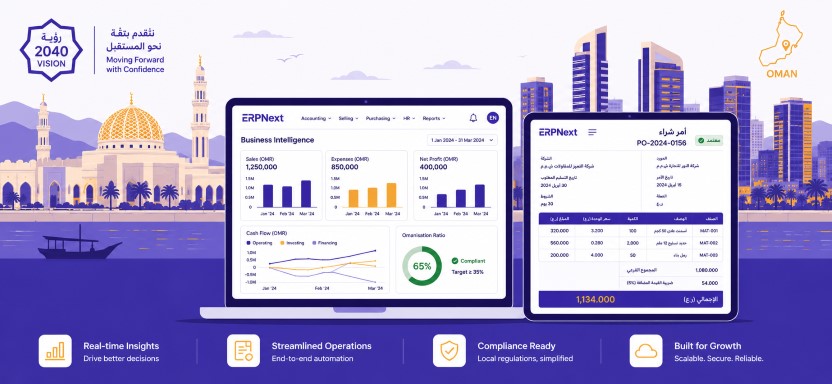
    Oman’s digital transformation goals under Vision 2040 are driving businesses to adopt smarter, more affordable technologies. ERPNext Oman stands as a powerful, open-source alternative to Odoo and SAP — offering the perfect balance of customization, cost-effectiveness, and scalability. For companies seeking a future-ready ERP solution, ERPNext is the clear choice to power sustainable growth in Oman.

  • Why ERPNext is the Best Open-Source Alternative to SAP and Odoo in Oman

    Why ERPNext is the Best Open-Source Alternative to SAP and Odoo in Oman

    Oman’s business landscape is transforming rapidly under Vision 2040, which emphasizes digital innovation and automation across industries. As small and medium enterprises (SMEs) look for affordable and flexible ERP solutions, ERPNext has emerged as a powerful contender — often compared to big names like SAP and Odoo.

    While SAP and Odoo are well-known, many Omani businesses are discovering that ERPNext offers the same core capabilities — and even more — without the heavy licensing costs and complexity.

    Here’s why ERPNext is considered the best open-source alternative to SAP and Odoo in Oman.

    1. Cost-Effective Without Compromising Quality

    One of the main reasons businesses in Oman prefer ERPNext is cost efficiency. Unlike SAP or Odoo, which can come with expensive licensing fees and add-ons, ERPNext is open-source — meaning you can use, customize, and host it at a fraction of the cost. For SMEs and startups focused on optimizing expenses, ERPNext provides enterprise-level features without the financial burden.

    2. Easy Customization for Omani Business Needs

    Every business in Oman has unique workflows, from manufacturing and construction to healthcare and retail.
    ERPNext offers unlimited customization options, allowing companies to tailor modules such as:

    • Accounting & Finance
    • Inventory & Supply Chain
    • HR & Payroll
    • Project Management
    • CRM & Sales

    Unlike SAP, where customization often requires high-level consultants, ERPNext allows easy in-house modifications — saving time and cost.

    3. Cloud-Ready and Scalable

    ERPNext is built on modern cloud architecture, making it ideal for businesses adopting digital-first strategies under Vision 2040.
    It supports on-premise and cloud hosting, ensuring flexibility and scalability as your business grows.

    With seamless integration and mobile accessibility, ERPNext enables real-time decision-making for managers and executives — whether in Muscat, Salalah, or Sohar.

    4. Simplified Implementation and Maintenance

    Compared to SAP, which often requires months of setup, ERPNext offers a faster and simpler implementation process.
    Local ERP experts in Oman can deploy ERPNext within weeks, offering:

    • Quick data migration
    • User training
    • Continuous support and updates

    This agility helps businesses go digital quickly without disrupting daily operations.

    5. Strong Community Support and Transparency

    ERPNext’s global open-source community is one of its greatest strengths.
    Thousands of developers, users, and ERP consultants contribute to regular updates, bug fixes, and feature improvements.

    For Omani businesses, this means no vendor lock-in and full transparency — a huge advantage over proprietary ERP systems like SAP.

    6. Industry-Specific Modules for Omani Businesses

    ERPNext is designed to serve a wide range of industries in Oman, including:

    • Manufacturing – Material planning, production tracking, and quality control
    • Construction – Project management, billing, and labor management
    • Retail & Distribution – POS, inventory, and customer management
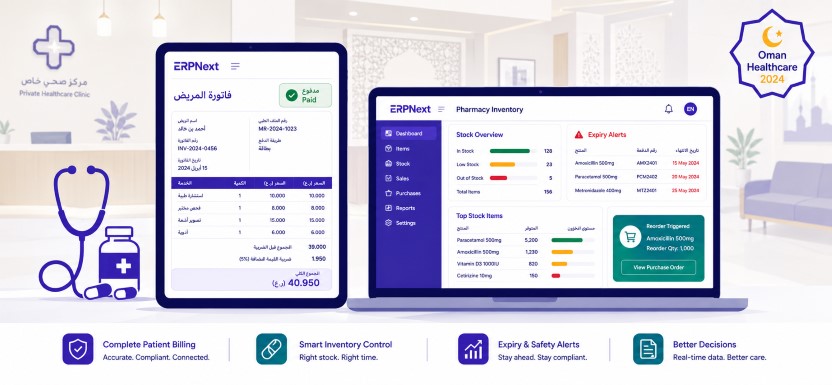
    • Healthcare – Patient management, billing, and reporting

    This makes ERPNext not just an ERP, but a complete business ecosystem for Omani enterprises.

    7. Perfect Fit for Oman Vision 2040

    ERPNext aligns perfectly with Oman’s Vision 2040, which encourages local innovation, digital adoption, and sustainable business practices.
    Its open-source model promotes local ERP development, customization, and job creation, making it an ideal tool for Oman’s digital future.


    Conclusion

    For businesses in Oman seeking an ERP that’s affordable, flexible, and future-ready, ERPNext stands out as the best open-source alternative to SAP and Odoo.
    It empowers SMEs to embrace automation, gain real-time visibility, and scale efficiently — all while supporting the nation’s digital transformation under Vision 2040.

    If you’re considering upgrading your ERP system, ERPNext offers the perfect balance of cost, customization, and capability for Oman’s growing business ecosystem.

  • ERPNext vs Odoo vs SAP: Which ERP Solution Fits Omani Businesses Best?

    ERPNext vs Odoo vs SAP: Which ERP Solution Fits Omani Businesses Best?

    Choosing the right ERP (Enterprise Resource Planning) software is crucial for Omani businesses aiming to streamline operations, enhance productivity, and align with Oman Vision 2040. With leading options like ERPNext, Odoo, and SAP, organizations often struggle to decide which platform offers the best fit for their size, budget, and business goals.

    Let’s compare these three ERP solutions based on pricing, scalability, customization, and local suitability for Omani enterprises.

    1. ERPNext: The Open-Source Powerhouse

    ERPNext is a fully open-source ERP designed for flexibility and cost-efficiency. It’s ideal for small and medium businesses in Oman looking for affordable digital transformation.

    Key Features:

    • Free and open-source with community or cloud hosting options
    • Modules for accounting, HR, CRM, projects, manufacturing, and more
    • Easy customization and integration with third-party tools
    • User-friendly dashboard and real-time reports

    Best For:
    Startups, SMEs, and businesses seeking a budget-friendly ERP in Oman with full control over customization.

    Pros:

    • Affordable and open-source
    • Fast deployment
    • Highly customizable

    Cons:

    • Requires technical expertise for setup and maintenance
    • Limited enterprise-grade scalability compared to SAP

    2. Odoo: The Modular All-Rounder

    Odoo offers a unique modular system where businesses can start small and add apps as they grow. It’s popular among Omani SMEs for its flexibility and strong community support.

    Key Features:

    • 50+ business apps covering every department
    • Cloud and on-premise deployment options
    • Strong integration between modules (Sales, HR, Inventory, etc.)
    • Attractive and intuitive interface

    Best For:
    Companies in Oman seeking a scalable ERP with smooth integration and good usability.

    Pros:

    • Flexible modular structure
    • Active global community
    • Cloud-ready

    Cons:

    • Paid enterprise edition can be costly
    • May require developer support for advanced customization

    3. SAP: The Enterprise-Grade Leader

    SAP is the global leader in ERP software, known for its powerful features and enterprise-level scalability. It’s widely used by large Omani corporations and government organizations.

    Key Features:

    • Advanced analytics and AI-driven insights
    • End-to-end process automation
    • Strong compliance and security features
    • Industry-specific modules

    Best For:
    Large organizations in Oman with complex operations and bigger budgets.

    Pros:

    • Robust and reliable
    • Scalable for multinational operations
    • Excellent data management and compliance tools

    Cons:

    • Expensive for SMEs
    • Complex implementation and training requirement

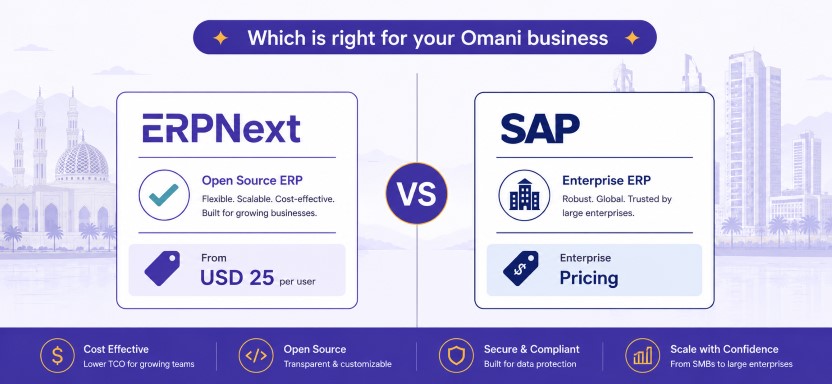
    Comparison Table: ERPNext vs Odoo vs SAP

    Feature / ERPERPNextOdooSAP
    CostLow / Open-sourceModerateHigh
    Ease of UseEasyEasyComplex
    CustomizationHighHighMedium
    ScalabilityMediumHighVery High
    Target UsersSMEsSMEs to Mid-sizedLarge Enterprises
    DeploymentCloud / On-premiseCloud / On-premiseCloud / On-premise
    SupportCommunity / PaidCommunity / EnterpriseEnterprise-grade

    4. Which ERP Solution Fits Omani Businesses Best?

    The best ERP solution depends on your company’s size, budget, and operational needs:

    • ERPNext – Perfect for small to mid-sized businesses in Oman seeking open-source flexibility and low-cost implementation.
    • Odoo – Ideal for growing companies that need modular scalability and modern features.
    • SAP – Best suited for large organizations that prioritize advanced analytics, compliance, and enterprise-grade performance.

    Conclusion

    When selecting between ERPNext, Odoo, and SAP, Omani businesses should consider budget, scalability, and technical expertise.
    For SMEs, ERPNext offers excellent value and control.
    For flexible modular growth, Odoo stands out.
    For large corporations, SAP remains the industry benchmark.

    By aligning your ERP choice with your business goals and Oman Vision 2040, you can drive digital transformation and long-term success.

  • Tips for Successfully Implementing a Manufacturing ERP in Oman

    Tips for Successfully Implementing a Manufacturing ERP in Oman

    In Oman’s rapidly growing industrial sector, manufacturing companies are under constant pressure to improve efficiency, reduce costs, and align with the nation’s Vision 2040 goals for innovation and digital transformation. Implementing a Manufacturing ERP system is one of the most effective ways to achieve this.

    A well-planned ERP implementation can unify departments, streamline production workflows, and provide real-time visibility into operations. However, successful implementation requires careful strategy and execution.

    1. Understand Your Manufacturing Needs

    Before selecting an ERP system, analyze your company’s manufacturing processes and challenges.
    Determine what areas need improvement — whether it’s inventory management, production scheduling, quality control, or cost tracking.

    This clarity will help you choose an ERP solution that supports your specific manufacturing workflow rather than a generic system.

    2. Choose the Right ERP Software for Manufacturing

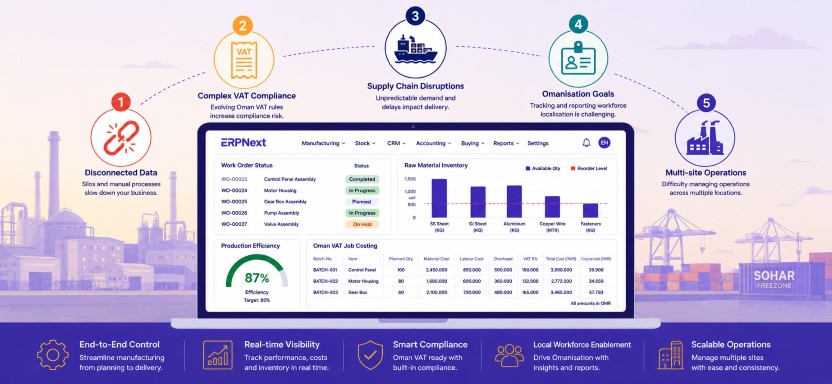
    Not all ERP solutions are built the same. For Oman’s manufacturing businesses, you need software that supports:

    • Production planning and scheduling
    • Material requirement planning (MRP)
    • Inventory and supply chain management
    • Real-time data tracking and reporting

    Popular platforms like ERPNext offer manufacturing-specific modules that integrate seamlessly with finance, HR, and sales — making it a strong choice for Omani industries.

    3. Collaborate with a Trusted ERP Implementation Partner in Oman

    Working with a local ERP implementation expert ensures better understanding of Omani business culture, regulations, and operational workflows.
    A professional ERP partner can help with:

    • Customization based on your industry needs
    • Data migration and integration
    • On-site training and ongoing support

    Choosing an experienced provider also reduces implementation risks and downtime.

    4. Prioritize Data Accuracy During Migration

    Data migration is often the most complex stage of ERP implementation.
    Ensure your existing manufacturing data — including production logs, supplier information, and financial records — is clean, accurate, and well-organized before transferring it to the new system.
    Clean data ensures that your ERP delivers reliable insights from day one.

    5. Train Employees for Smooth Adoption

    ERP success depends on user adoption. Organize training sessions and workshops to help staff understand new processes and system navigation.
    Encourage feedback and provide hands-on practice to boost confidence and reduce resistance to change.

    6. Start with a Pilot Phase

    Rather than deploying the ERP system across your entire plant at once, begin with a pilot implementation in a single department or production line.
    This allows you to test workflows, fix potential issues, and ensure the system aligns with real-world manufacturing operations before full rollout.

    7. Monitor Performance and Optimize

    After your ERP system goes live, continuously monitor KPIs like production output, downtime, and material costs.
    Use ERP-generated reports to identify bottlenecks and areas for improvement.
    Regular optimization ensures the system evolves with your manufacturing needs.

    8. Align with Oman Vision 2040

    Implementing a modern ERP system aligns perfectly with Oman Vision 2040, which emphasizes industrial growth, innovation, and sustainability.
    By adopting digital solutions like ERP, manufacturing companies in Oman can enhance productivity, meet global standards, and strengthen their role in the national economy.

    Conclusion

    Successfully implementing a manufacturing ERP in Oman requires a blend of strategic planning, collaboration, and continuous improvement. With the right ERP solution and a trusted local partner, manufacturers can optimize production, improve efficiency, and move closer to achieving Vision 2040’s industrial excellence.

  • ERPNext vs SAP and Odoo: Evaluating Total Cost of Ownership for Omani Companies

    ERPNext vs SAP and Odoo: Evaluating Total Cost of Ownership for Omani Companies

    Investing in an enterprise‑resource‑planning (ERP) system is a strategic decision with long‑term implications. For companies operating in Oman—whether manufacturing, trading, services or construction—the right ERP can transform efficiency. But just as important as features is the Total Cost of Ownership (TCO): what you’ll pay not just upfront, but over 3‑5 years (or more).
    In this article we compare three prominent ERP options:

    • ERPNext (open‑source)
    • Odoo (open‑core / commercial)
    • SAP ERP (proprietary enterprise‑grade)
      We evaluate them through the lens of Omani business conditions: regional partner support, localization (Arabic / GCC regulatory), scalability, and cost structure.

    What is “TCO” in an ERP context?

    Before comparing vendors, we should define what we mean by TCO for ERP. According to industry guides:

    “TCO = purchase/ subscription price + implementation costs + operating costs for the next 5‑10 years.” NetSuite+1

    Key components to model:

    • License or subscription fees
    • Hosting / infrastructure (on‑premises vs cloud)
    • Implementation consulting, data migration, customisation
    • Training and change management
    • Ongoing support, maintenance, upgrades
    • Hidden/internal costs (downtime during go‑live, productivity loss, upgrades)
    • Scalability costs (adding users, modules)

    In Oman, additional variables include: local partner ecosystem, support in Arabic, compliance with Omani regulations/VAT, and possibly regional hosting.

    Profile of the three ERP options

    ERPNext

    • Fully open‑source (GPLv3) software. zikpro.com+1
    • Includes a broad suite of modules out‑of‑the‑box: accounting, inventory, manufacturing, HR, CRM. Wikipedia+1
    • License cost is zero; you incur cost for hosting, support, customisation. dexciss.io+1
    • Advantages: low license barrier, good for smaller/mid‑sized companies comfortable with local IT/partner support.
    • Considerations: fewer large global reference cases than SAP; partner ecosystem smaller.

    Odoo

    • Open‑core model: a free “Community” edition and a paid “Enterprise” edition. Grit Brokerage
    • Modular architecture and large app marketplace. Appvizer
    • Licensing cost is per‑user/per‑module in many cases, which can escalate. dexciss.io+1
    • Good fit for SMEs wanting modern UX and flexible modules; but TCO can grow as users/modules scale.

    SAP ERP

    • Enterprise‑grade vendor with deep functionality, multi‑company, multi‑country, massive scale. Wikipedia+1
    • Licensing and implementation cost are higher; often aimed at larger organisations. ssd4me.com+1
    • Strong for businesses with complex processes, multiple locations, regulatory/compliance demands.

    TCO Comparison: Key Cost Drivers for Omani Companies

    Here’s how each major cost driver tends to play out in Oman for these three.

    1. Licensing / Subscription

    • ERPNext: Effectively zero software license. You will pay for cloud hosting (or self‑host), but you don’t pay per‑user license fees for the core product. dexciss.io+1
    • Odoo: If using Enterprise edition, you pay per user / per module. For example, sources show per‑user per‑month pricing for Odoo. Grit Brokerage+1
    • SAP: Significant license or subscription cost. In the GCC/Oman context, one article indicates licensing for SAP ERP in Oman starting in OMR 7,000 to OMR 15,000 plus annual maintenance. beDots Oman

    Implication for Oman: For small‑to‑mid sized companies or those with tighter budgets, ERPNext offers lowest barrier. Odoo can fit but watch user/module count. SAP will require serious budget and justification.

    2. Implementation & Customisation

    • All systems incur this cost. But ERPNext’s advantage is fewer license‑dependencies; still you’ll need consulting/time.
    • Odoo: Modularity means you might customise many apps/modules, which adds cost. (Per one source: “While the plan cost would be almost negligible compared to the implementation cost.”) HostBooks
    • SAP: Implementation time and cost significantly higher. For example, one study: “The average cost of implementing Tier I SAP … at around 18.6% of revenue” for large firms. Panorama Consulting Group

    Implication for Oman: If local partners are modest, consultancy cost may include international expertise and travel—so pick a vendor with proven Oman/GCC partner network.

    3. Hosting / Infrastructure

    • Cloud vs on‑premises will matter in Oman depending on data sovereignty, connectivity, latency, regional regulation.
    • ERPNext: Can self‑host (local server) or choose managed cloud (lower infrastructure cost).
    • Odoo: Similar choices; enterprise hosting or cloud.
    • SAP: Can be cloud or hybrid; larger systems often have substantial infrastructure/hosting overhead.

    4. Maintenance, Upgrades, Support

    • ERPNext: Because open‑source, upgrades require internal/partner resources; but no locked‑in maintenance fees. dexciss.io
    • Odoo: Enterprise version includes support; but you also incur renewal/subscription fees and potential custom module upgrade costs.
    • SAP: Annual maintenance fees typically 15‑22% or more of license cost. Implementation complexity means higher ongoing cost. ssd4me.com+1

    5. Scalability and Hidden Costs

    • As you add users, countries, companies, modules, the cost escalates for Odoo and SAP more steeply than ERPNext (license‑free core).
    • Hidden costs: Training, change management, downtime, productivity loss during go‑live. These often underestimated. NetSuite

    What This Means for Omani Companies

    Given your setting (Oman) and typical company size (SME to upper‑mid, possibly multi‑company), here are some practical insights:

    • If your business is small‑to‑mid sized (say < 200 users) and your processes are standard (inventory/trading/finance) without extreme customisation, ERPNext may yield the lowest TCO and highest flexibility.
    • If your business needs strong modular flexibility, modern UX, larger user‑base but still within controlled budget, Odoo may strike balance—but ensure you budget for user licences and module cost growth.
    • If you are a large enterprise, operating across multiple countries, with heavy compliance/industry requirements (e.g., oil & gas, complex manufacturing) then SAP may fit—but you must anticipate high TCO and strong ROI justification.
    • For Oman specifically, ensure: local Arabic / Arabic‑GCC compliance, VAT / tax support, partner support in the region.
    • Conduct a 5‑year TCO model: calculate all costs for 5 years (license + implementation + support + upgrades) rather than just upfront cost. NetSuite
    • Benchmark user count, module growth, number of companies/entities in your organisation, future growth plans—because many ERP vendors’ TCO assume growth.

    Sample TCO Comparisons (Indicative)

    Below are rough illustrative scenarios of how TCO might compare (simplified):

    VendorLicence costsImplementation + customisingYearly support/hosting5‑year approximate TCO*
    ERPNextLow (zero licence)ModerateModerateLowest
    OdooModerate (per user)Moderate‑HighModerate‑HighMid
    SAPHigh licence/subscriptionHighHighHighest

    *Actual numbers will vary—use this as a directional guide.

    Also note analysis for GCC region puts Odoo’s lower user cost vs SAP for SMEs. ssd4me.com And for Oman, one source indicates SAP licensing starting OMR 7,000‑15,000 plus maintenance. beDots Oman

    Key Questions for Decision‑makers in Oman

    • What is your user count today and projected in 3‑5 years?
    • How many modules/functional areas (finance, manufacturing, supply‑chain, service) will you need?
    • How many companies/entities/locations will you need in the system?
    • Are your processes standard, or will you need heavy customisation?
    • Do you prefer cloud deployment (lower infrastructure cost) or on‑premises (maybe for data‑sovereignty)?
    • What is the availability of local partner/support for the ERP in Oman (and GCC)?
    • What is your budget for total cost over 5 years (not just upfront)?
    • How much business disruption/training time can you tolerate at go‑live?
    • Are there regulatory/localisation needs (Arabic language, GCC VAT, Oman legal) built‑in or need customisation?

    My Recommendation for Your Context

    Given that your company (Gazelletec) provides digital solutions in Oman and may service other companies in Oman, the following is a suggestion:

    • For many Omani SMEs, ERPNext offers the best cost‑effectiveness. Because there’s minimal license cost, you can focus budget on implementation and process alignment.
    • If you choose ERPNext, pick a local implementation partner familiar with GCC/Oman regulations to ensure localisation and support.
    • If you anticipate scaling rapidly (many users, multiple modules, growth into GCC) and need polished UX and large ecosystem, evaluate Odoo—but do careful modelling of per‑user costs and module expansion.
    • Only consider SAP if you are (or will become) a large complex organisation (multi‑entity, multi‑country) where the scale justifies the higher TCO, and you have budget to match.
    • Regardless of vendor, build a 5‑year budget, include hidden costs (training, downtime, upgrades), and negotiate for transparent support/upgrade costs.

    Conclusion

    Choosing the right ERP in Oman is less about picking the “biggest brand” and more about aligning functionality, growth plans, localisation needs, and total cost.

    • ERPNext = lowest TCO path for standard processes & tight budgets.
    • Odoo = flexible mid‑range option, but watch user‑ & module‑based costs.
    • SAP = premium/enterprise option with high TCO but depth of functionality.
      For your business and the regional context, modelling a 5‑year TCO and matching to your growth trajectory will be the most valuable exercise.
  • Tips to Consider for Implementing ERP Software in Oman

    Tips to Consider for Implementing ERP Software in Oman

    Implementing ERP software is one of the most strategic decisions for any business in Oman, especially as the nation moves forward with Vision 2040 and its emphasis on digital transformation. A well-planned ERP implementation can streamline operations, improve efficiency, and enhance decision-making across departments.

    Here are some key tips to ensure successful ERP implementation in Oman.

    1. Define Your Business Goals Clearly

    Before choosing an ERP system, identify your company’s specific needs and pain points.
    Ask questions like:

    • What processes need automation?
    • Which departments will use the ERP most?
    • How will it support long-term business goals?

    Having clear objectives helps select the right ERP solution, such as ERPNext or other cloud-based platforms tailored for Omani businesses.

    2. Choose the Right ERP Vendor

    Selecting a reliable ERP software provider in Oman is crucial. Look for vendors who:

    • Offer local support and training
    • Understand Omani business regulations
    • Provide flexible and scalable ERP solutions

    Partnering with a trusted vendor ensures smooth implementation and long-term support.

    3. Involve Key Stakeholders Early

    ERP implementation affects multiple departments—finance, HR, sales, and operations.
    Involve department heads and end-users from the beginning to ensure that:

    • Everyone understands the purpose of ERP
    • There’s better user adoption
    • Workflow customization meets real needs

    This collaborative approach minimizes resistance and improves system acceptance.

    4. Focus on Data Migration and Accuracy

    Migrating existing data is one of the most sensitive steps.
    Ensure that your data is:

    • Cleaned and validated before migration
    • Properly mapped to the new system
    • Backed up securely

    Accurate data ensures smoother operations and better insights once the ERP goes live.

    5. Invest in Employee Training

    Even the best ERP software will fail without proper user training.
    Conduct hands-on workshops and provide step-by-step guides so employees can adapt to the new system confidently. Continuous training also helps in reducing errors and improving efficiency.

    6. Start with a Pilot Implementation

    Instead of rolling out ERP software across all departments immediately, start with a pilot phase.
    This allows your team to:

    • Test system performance
    • Identify potential issues early
    • Adjust configurations before a full-scale launch

    A phased approach ensures smoother adoption and reduced downtime.

    7. Ensure Ongoing Maintenance and Support

    ERP implementation doesn’t end after deployment. Regular maintenance, updates, and performance checks are essential for long-term success.
    Partner with an ERP support provider in Oman who can handle upgrades, technical issues, and system enhancements.

    8. Align with Oman Vision 2040

    Oman’s Vision 2040 promotes digital innovation, automation, and sustainability in business. Implementing ERP software that aligns with these goals helps your organization stay competitive, compliant, and future-ready.

    Conclusion

    Successful ERP implementation in Oman requires planning, collaboration, and ongoing commitment. Whether you’re an SME or a growing enterprise, choosing the right ERP solution and following these tips will help streamline your operations and drive digital success.

  • How ERPNext Enables Cost-Effective DigitalTransformation for SMEs in Oman

    How ERPNext Enables Cost-Effective DigitalTransformation for SMEs in Oman

    Small and medium-sized enterprises (SMEs) are the backbone of Oman’s growing economy. However, many local businesses face challenges in managing operations, data, and resources efficiently.

    This is where ERPNext plays a transformative role, offering a cost-effective ERP solution in Oman that simplifies processes, reduces costs, and boosts business performance.

    1. Why Digital Transformation Matters for Omani SMEs

    In today’s competitive market, SMEs in Oman need to digitize their operations to stay ahead. Manual processes, disconnected systems, and limited visibility often hinder growth.
    Digital transformation enables businesses to:

    • Automate routine tasks
    • Improve accuracy and data visibility
    • Enhance productivity and collaboration
    • Make smarter, data-driven decisions

    With the right ERP system like ERPNext, SMEs can achieve these goals without heavy financial investment.

    2. ERPNext: Affordable and Scalable ERP Solution

    ERPNext Oman is one of the most affordable open-source ERP systems designed to help small and medium businesses embrace digital transformation. Unlike traditional ERP software that comes with high license fees, ERPNext offers both cloud and on-premise deployment options, making it flexible and budget-friendly.

    Key Features:

    • Comprehensive modules: Accounting, HR, Sales, CRM, Manufacturing, Inventory, and more
    • Real-time reporting and analytics
    • Multi-company and multi-currency support
    • Mobile access for remote management
    • Easy customization for different business types

    3. Cost-Effective Implementation and Maintenance

    One of the biggest advantages of ERPNext for SMEs in Oman is its low implementation and maintenance cost.

    • No expensive licenses: As an open-source platform, it eliminates hefty licensing fees.
    • Minimal IT infrastructure: Cloud-based ERPNext requires limited hardware investment.
    • Lower customization costs: The platform allows in-house teams to make simple changes easily.

    This cost efficiency helps Omani SMEs invest more in growth areas like marketing, workforce development, and innovation.

    4. Streamlined Operations and Improved Efficiency

    ERPNext automates multiple business functions under one unified system, reducing manual errors and duplication.
    With real-time data access, business owners in Oman can:

    • Track performance across departments
    • Monitor expenses and profits instantly
    • Manage customers and suppliers efficiently
    • Ensure timely decision-making with analytics dashboards

    This integration enhances overall productivity and creates a smoother workflow across the organization.

    5. Supporting Oman Vision 2040

    Oman’s national vision focuses on economic diversification and digital innovation. ERPNext supports these goals by enabling local SMEs to transition into digital-first organizations.
    It empowers businesses to modernize operations, maintain compliance, and compete effectively in regional and global markets—without the financial burden of enterprise-grade ERP systems like SAP or Oracle.

    6. Local Customization for Omani Businesses

    ERPNext can be tailored to meet the unique needs of Omani businesses—whether it’s Arabic language support, tax configuration, or industry-specific workflows. Local ERP service providers in Oman also offer custom implementation and ongoing support, ensuring a smooth digital journey for SMEs.

    Conclusion

    ERPNext stands out as the most cost-effective ERP solution for SMEs in Oman, enabling true digital transformation through automation, scalability, and affordability. By adopting ERPNext, Omani businesses can streamline their operations, reduce costs, and achieve sustainable growth aligned with Oman Vision 2040.

  • Why ERP Solutions are a Game-Changer for SMEs in Oman

    Why ERP Solutions are a Game-Changer for SMEs in Oman

    Small and Medium-sized Enterprises (SMEs) are the lifeblood of Oman’s economy, driving innovation, creating jobs, and fostering diversification. However, in today’s fast-paced digital era, simply having a great product or service isn’t enough. Many Omani SMEs face common challenges: disconnected systems, manual data entry, lack of real-time insights, and difficulties scaling operations. These inefficiencies can stifle growth and limit competitiveness.

    Enter Enterprise Resource Planning (ERP) solutions. Far from being exclusive to large corporations, modern ERP Solutions Oman are proving to be a revolutionary force for smaller businesses. This article explores why adopting an ERP system is not just an upgrade, but a true game-changer for SMEs across Oman.

    The “Game-Changer” Explained: What ERP Brings to SMEs in Oman

    At its core, an ERP system integrates all facets of your business – from finance and HR to inventory and sales – into a single, unified software platform. This integration is where the “game-changing” magic happens, offering a suite of benefits specifically tailored to the needs of SMEs in Oman.

    1. Unprecedented Operational Efficiency

    One of the most immediate and significant ERP benefits Oman SMEs experience is a drastic improvement in efficiency. By automating routine tasks like invoicing, order processing, and inventory updates, an ERP frees your team from mundane, time-consuming administrative work. This directly leads to business efficiency Oman, allowing staff to focus on strategic activities that drive growth and customer satisfaction.

    2. Real-Time Insights for Smarter Decisions

    Imagine having an instant, comprehensive overview of your business’s health at your fingertips. That’s what an ERP provides. Centralized data means you can access accurate, real-time reports on sales performance, cash flow, inventory levels, and production efficiency. This enables Oman business operations to be managed with data-driven insights, allowing you to make faster, more informed decisions that can pivot your strategy ahead of competitors.

    3. A Foundation for Sustainable Growth (SME Growth Oman)

    For any SME with ambitions to scale, an ERP system is non-negotiable. Traditional, disparate systems struggle under increased volume, leading to errors and delays. A robust ERP for SMEs Oman provides a scalable architecture that can effortlessly handle increased transactions, more complex workflows, and a growing workforce. It’s the framework that supports SME growth Oman, ensuring your infrastructure doesn’t become a bottleneck.

    4. Enhanced Customer Satisfaction & Relations

    An ERP impacts every customer touchpoint. From faster order processing and accurate inventory checks to streamlined customer service inquiries and personalized marketing, an integrated system improves the overall customer experience. Knowing exactly what’s in stock, where an order is, or a customer’s history means you can provide superior service, building loyalty and positive word-of-mouth.

    5. Driving Digital Transformation Oman

    The world is digital, and Oman is no exception. Implementing integrated business software Oman like an ERP is a fundamental step in your digital transformation journey. It connects your online sales, your back-office operations, your marketing efforts, and your customer service, creating a cohesive digital ecosystem. This positions your SME to fully embrace e-commerce, digital marketing, and other advanced technologies.

    Key Features of Game-Changing ERP Solutions for Omani SMEs

    When evaluating ERP Solutions Oman, look for systems that offer:

    • Financial Management: Robust accounting, budgeting, and financial reporting aligned with Omani regulations.
    • Inventory & Supply Chain: Real-time tracking, optimized ordering, and efficient warehouse management.
    • Customer Relationship Management (CRM): Tools to manage leads, sales pipelines, and customer interactions effectively.
    • Human Resources (HR): Payroll, employee records, and performance management.
    • Reporting & Analytics: Customizable dashboards and reports for actionable insights.
    • Scalability & Customization: The ability to grow with your business and adapt to unique needs.
    • Cloud Capability: Many Cloud ERP Oman options offer flexibility, accessibility, and lower upfront IT costs.

    Choosing the right ERP implementation Oman partner is equally vital to ensure smooth integration and ongoing support.

    Conclusion: Seize the Future with ERP

    For SMEs in Oman, the choice is clear: embrace digital transformation or risk being left behind. ERP Solutions Oman are more than just software; they are strategic investments that empower small and medium businesses to achieve unparalleled operational efficiency, make smarter decisions, and unlock significant growth potential.

    By leveraging an integrated ERP system, Omani SMEs can streamline their processes, enhance their competitive edge, and contribute more effectively to the nation’s economic progress. It’s truly a game-changer that can redefine your business’s future.

  • Why ERP Solutions Oman Are Essential For Small & Medium Businesses in Vision 2040

    Why ERP Solutions Oman Are Essential For Small & Medium Businesses in Vision 2040

    Oman Vision 2040 is not just a strategic plan; it’s a national ambition. It charts a bold course toward a diversified, innovative, and private-sector-led economy. At the very heart of this ambition are the Sultanate’s Small and Medium Enterprises (SMEs). Yet, for many Omani SMEs to make the leap from ambition to reality, they must first overcome a critical internal challenge: operational inefficiency, disconnected data, and systems that can’t keep pace with growth.

    This is where an Enterprise Resource Planning (ERP) system becomes indispensable. An ERP is a unified software solution that integrates all core business functions—from finance and HR to inventory and sales—into a single, coherent platform. This article explores why ERP Solutions Oman are no longer a luxury for large corporations but an essential, foundational investment for SMEs aiming to compete, scale, and succeed within the framework of Vision 2040.

    Understanding Oman Vision 2040: The Call for a New Business DNA

    Before we can connect the dots to ERP, we must first understand the pillars of Vision 2040. This national strategy is built on key objectives, including:

    • Economic Diversification: Reducing reliance on oil and gas by fostering sectors like logistics, manufacturing, tourism, and technology.
    • Private Sector Growth: Empowering SMEs to become the primary engine for job creation and economic growth.
    • Digital Transformation: Leveraging technology and innovation to enhance competitiveness and create a knowledge-based society.
    • Sustainable Development: Ensuring that growth is efficient, balanced, and environmentally conscious.

    For an SME, this vision translates into a clear mandate: evolve, digitize, and optimize. The era of thriving on spreadsheets and manual processes is ending.

    Why Traditional Methods Fall Short for Omani SMEs

    Many Omani SMEs still run on a patchwork of disconnected tools: accounting software in one department, Excel spreadsheets for inventory in another, and manual logs for HR. This “siloed” approach creates critical business bottlenecks:

    • Lack of Real-Time Data: Management cannot get an accurate, instant snapshot of the business’s health.
    • Widespread Inefficiency: Employees waste valuable time on redundant data entry and manual, error-prone tasks.
    • Poor Scalability: As the business grows, these manual systems crack under the pressure, leading to service delays and rising costs.
    • Weak Decision-Making: Without centralized data, strategic decisions are based on guesswork, not insights.

    These are the very challenges that prevent an SME from becoming the agile, competitive force envisioned in Vision 2040 business plans.

    How ERP Solutions Oman Bridge the Gap for Growth

    This is where ERP Solutions Oman act as a catalyst. An integrated ERP system directly attacks these bottlenecks and provides the foundation for growth.

    1. Streamlining for Unmatched Business Efficiency

    The most immediate impact of an ERP for SMEs Oman is automation. By integrating all functions, an ERP eliminates redundant data entry. An order from sales automatically updates inventory, signals the warehouse, and creates an entry in finance. This saves countless hours, reduces human error, and frees your team to focus on high-value tasks like customer service and innovation.

    2. Data-Driven Decision Making

    An ERP platform transforms your business into a data-first organization. Instead of guessing, you know. You can instantly see your most profitable products, your slowest-moving inventory, your real-time cash flow, and your team’s performance. This allows Omani SME owners to make agile, informed decisions, pivot strategies quickly, and seize opportunities.

    3. Scalability to Support Your Ambition

    A scalable integrated business software Oman package is designed to grow with you. Whether you add ten new products, open a new branch in Sohar, or double your workforce, a modern ERP can handle the increased complexity without breaking a sweat. This gives you a clear path for Oman SME growth without being held back by your own systems.

    4. Enhancing Competitiveness

    In today’s market, efficiency and data are competitive advantages. By implementing a robust ERP, an Omani SME can operate with the same level of precision and efficiency as a much larger corporation. This levels the playing field, enhances customer satisfaction with faster, more accurate service, and strengthens your position in the market.

    Aligning with Vision 2040: ERPs as a Tool for Digital Transformation Oman

    ERP Solutions Oman are the foundational backbone of digital transformation Oman. You cannot build a “smart” business on a weak foundation.

    An ERP is the central “brain” that connects all other digital tools. It’s the platform that allows you to integrate e-commerce, customer relationship management (CRM), and supply chain analytics. For any SME looking to innovate, diversify, and compete in the digital-first economy of Vision 2040, a modern ERP is not just a tool—it’s the launching pad.

    Choosing the Right ERP for SMEs Oman

    When considering ERP Solutions Oman, it’s crucial to find the right fit. Look for a solution that is:

    • Scalable: Can it start small and grow with you?
    • Flexible: Can it be customized to your unique industry and business processes?
    • Localised: Does it support Omani VAT regulations and local business practices?
    • Accessible: Are modern, cloud-based options available to reduce infrastructure costs?

    This is why open-source solutions like ERPNext are gaining significant traction, offering world-class power without prohibitive licensing fees. Equally important is your implementation partner. Choose a local partner who understands the Omani market and can provide reliable ERPNext Oman support.

    Just as a robust ERP system forms your operational backbone, a strong online presence is crucial. For expert guidance on your digital footprint, explore what a best web design company can offer in Oman. To learn more about the broader goals and initiatives of the Sultanate, refer to the official Oman Vision 2040 website.

    Conclusion

    To thrive in the ambitious future mapped out by Vision 2040, Omani SMEs must be agile, efficient, and data-driven. This is no longer achievable with outdated, fragmented systems.

    ERP Solutions Oman are the essential investment for any small or medium business serious about growth. It is the engine that will power your digital transformation, streamline your operations, and provide the insights you need to compete and succeed in Oman’s new economy.

  • ERPNext for Retail: Seamlessly Integrating Point of Sale (POS) and Inventory Management

    ERPNext for Retail: Seamlessly Integrating Point of Sale (POS) and Inventory Management

    In today’s fast-paced retail world, efficiency, accuracy, and seamless operations are key to staying competitive. Retailers often struggle with managing multiple systems — one for sales, another for inventory, and yet another for accounting or reporting. This fragmentation leads to data duplication, poor visibility, and slow decision-making.

    Enter ERPNext, a comprehensive open-source ERP platform that unifies business operations into a single, cohesive system. One of its most powerful combinations is the integration of Point of Sale (POS) and Inventory Management — a true game changer for modern retail businesses.

    This article explores how ERPNext bridges the gap between front-end sales and back-end operations, ensuring smooth, automated, and intelligent retail management.


    Why Integration Between POS and Inventory Matters

    In a typical retail setup, POS and inventory often function as separate systems. While the POS handles billing, customer transactions, and receipts, the inventory management system keeps track of stock levels, product movement, and reordering. When these two systems don’t communicate effectively, retailers face several issues:

    • Stock mismatches: Sales data may not immediately reflect in inventory counts.
    • Delayed decision-making: Managers can’t access real-time stock availability or sales trends.
    • Human errors: Manual data entry between systems increases the chance of mistakes.
    • Poor customer experience: Customers may find products “available” in the system but “out of stock” in reality.

    With ERPNext, these challenges are eliminated. The POS and Inventory modules work hand in hand, sharing real-time data and automating every transaction update.


    Understanding ERPNext’s POS Module

    ERPNext’s Point of Sale module is designed for speed, simplicity, and offline readiness. It enables retailers to handle transactions seamlessly — whether it’s a supermarket, clothing boutique, pharmacy, or electronics store.

    Key Features of ERPNext POS:

    1. Offline Mode
      The POS can work even when the internet connection is down. Once connectivity is restored, all transactions automatically sync with the central ERPNext database.
    2. Quick Checkout Process
      The interface is clean and optimized for quick sales. Products can be searched by name, barcode, or SKU. Discounts, taxes, and loyalty points can be applied instantly.
    3. Multi-Store and Multi-User Support
      ERPNext supports multiple retail outlets, each with its own POS profile, cashiers, and permissions. This allows business owners to monitor performance across branches from a single dashboard.
    4. Customer and Loyalty Management
      Every transaction can be linked to a customer profile, allowing retailers to track purchase history, reward loyal customers, and run targeted promotions.
    5. Integrated Payments
      The POS supports various payment methods — cash, card, credit, or digital wallets. Payments are automatically reconciled with accounting entries in ERPNext.
    6. Real-Time Sync with Inventory
      As soon as a sale is made, the system instantly updates the stock levels in the warehouse or retail location, keeping the inventory accurate at all times.

    ERPNext’s Inventory Management: Precision and Control

    Behind every successful retail operation lies an efficient inventory management system. ERPNext’s Inventory module offers full control over stock movements, product tracking, and valuation.

    Core Capabilities of ERPNext Inventory Management:

    1. Real-Time Stock Updates
      Every sale, purchase, return, or stock transfer immediately reflects in the system. Retailers can monitor stock levels across all locations without manual intervention.
    2. Multi-Warehouse Management
      Manage stock across multiple stores, warehouses, or franchise locations. ERPNext ensures visibility and traceability for every product movement.
    3. Automatic Reorder Levels
      You can set minimum stock thresholds for each item. When the quantity drops below the limit, ERPNext automatically creates a purchase request or purchase order.
    4. Batch and Serial Number Tracking
      Perfect for businesses selling perishable or serialized products, such as food, medicine, or electronics. ERPNext tracks expiry dates and warranty periods effortlessly.
    5. Stock Valuation and Costing Methods
      ERPNext supports FIFO, LIFO, and Moving Average costing, giving flexibility in how inventory value is calculated.
    6. Barcode and SKU Management
      The system supports barcode printing and scanning for faster item lookups, reducing checkout time and human error.

    Seamless Integration: How POS and Inventory Work Together in ERPNext

    The true strength of ERPNext lies in the real-time synchronization between POS and Inventory modules. Let’s explore how this integration benefits retail operations step by step.

    1. Instant Stock Deduction

    When a cashier completes a sale through the POS, the system automatically reduces the sold quantity from the relevant warehouse or store inventory. There’s no need to manually update the stock — ERPNext does it instantly.

    2. Accurate Financial Records

    Every POS transaction generates corresponding accounting entries in ERPNext. This ensures that your books are always up to date, linking sales, stock, and financial data seamlessly.

    3. Centralized Data Access

    Whether you have one outlet or ten, ERPNext centralizes all POS and inventory data. Business owners can monitor stock levels, sales, and profits across branches in real time.

    4. Automated Reordering

    When stock levels reach the minimum threshold after several sales, ERPNext automatically triggers a reorder. This ensures that shelves are never empty, and customers always find what they’re looking for.

    5. Sales Insights and Reporting

    Because all data is stored in one system, ERPNext can generate detailed reports — best-selling products, slow-moving stock, peak hours, and profitability by location — empowering managers to make data-driven decisions.


    Real-World Benefits for Retailers

    ERPNext’s unified POS and Inventory management doesn’t just streamline operations; it transforms how retailers do business.

    1. Improved Accuracy

    Since all transactions automatically update inventory and financial data, there’s minimal room for manual errors.

    2. Faster Operations

    Cashiers process transactions faster, and store managers spend less time reconciling data.

    3. Better Stock Visibility

    With real-time data, retailers can track which items sell fastest, which stores need replenishment, and which products are underperforming.

    4. Enhanced Customer Experience

    Customers benefit from shorter checkout lines, accurate billing, and availability of their favorite products.

    5. Informed Business Decisions

    The system’s detailed analytics give business owners the confidence to plan promotions, pricing, and procurement strategies effectively.

    6. Scalability

    As your retail business grows, ERPNext grows with you. You can easily add new stores, POS terminals, and product lines without complex reconfiguration.


    Example Scenario: A Multi-Branch Retail Store

    Imagine a clothing retailer with three branches in Oman — Muscat, Sohar, and Salalah. Each branch runs its own POS terminal, but all are connected to the same ERPNext system.

    • A sale in the Muscat branch immediately reduces the local stock.
    • The system checks if stock levels are nearing the reorder point.
    • If they are, a purchase request is generated and sent to the supplier.
    • The business owner can log into ERPNext from anywhere to view total sales, profit margins, and stock movement across all branches.

    This complete operational transparency allows retailers to manage expansion confidently while maintaining control and accuracy.


    Key Takeaways

    • Unified System: ERPNext integrates POS, Inventory, and Accounting into one cohesive platform.
    • Real-Time Updates: Every sale, purchase, or return reflects instantly across all modules.
    • Offline Capability: POS can work without an internet connection and sync later.
    • Multi-Store Support: Perfect for chain stores or franchise-based retailers.
    • Automation: From stock updates to purchase requests, ERPNext automates repetitive tasks.
    • Data-Driven Insights: Generate powerful reports for informed decision-making.

    Why ERPNext is the Future of Retail ERP

    ERPNext stands out because it’s open-source, customizable, and cost-effective compared to traditional ERP systems. Retailers don’t have to rely on multiple disconnected software solutions — everything from billing to bookkeeping is handled in one place.

    Its intuitive interface, combined with mobile accessibility and cloud deployment options, makes it a flexible choice for small and large retailers alike.

    Whether you’re running a boutique, a supermarket, or a multi-branch retail chain, ERPNext ensures that your POS, inventory, and financials work together seamlessly — saving time, reducing errors, and improving profitability.


    Final Thoughts

    In a retail landscape where agility and accuracy define success, ERPNext’s seamless integration of POS and Inventory Management empowers retailers to operate smarter, not harder. By bridging the gap between sales and stock, it eliminates inefficiencies, improves visibility, and delivers an exceptional customer experience.

    If your retail business still juggles multiple systems, it’s time to switch to a unified ERP platform that grows with you — ERPNext, the smarter way to run retail.